
 Contact us
October 7,2021
Why you need an SSL certificate

An SSL is a Secure Socket Layer, its purpose is to provide a secure connection between an internet browser and a website in order to transmit sensitive data online. Previously, it was mainly used on eCommerce websites to secure personal information being sent when paying for items. However, these days we’d suggest nearly every website should have one, here why…
Google has been pushing for all websites to have an SSL certificate, when they announced back in 2014, the desire to see the web more secure with “https everywhere”. Since then they’ve been taking steps to encourage webmasters to upgrade their website to have an SSL certificate.
They’re doing this by making changes in the Google Chrome browser (which is currently is used by over 50% of web traffic), to be more transparent in marking websites as non-secure.
Note: If you want to see a breakdown of what browser visitors use are using on your website, you can by logging into your Google Analytics, navigate to Audience > Technology > Browser & OS.
Google Chrome has been gradually making changes in the browser to more clearly mark websites as ‘not-secure’. Since January this year, a non-secure labels have changed for any website that’s not secure (has not SSL certificate) and takes payment or personal details (contact forms) from visitors.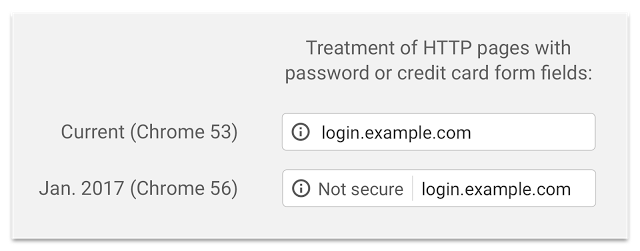
Google’s now updating the browser so that all websites without an SSL and any type input fields, such as contact forms, newsletter signups, search bars etc. are marked as non-secure.
Below is one example of what will happen if one of your websites visitors types into an insecure website:

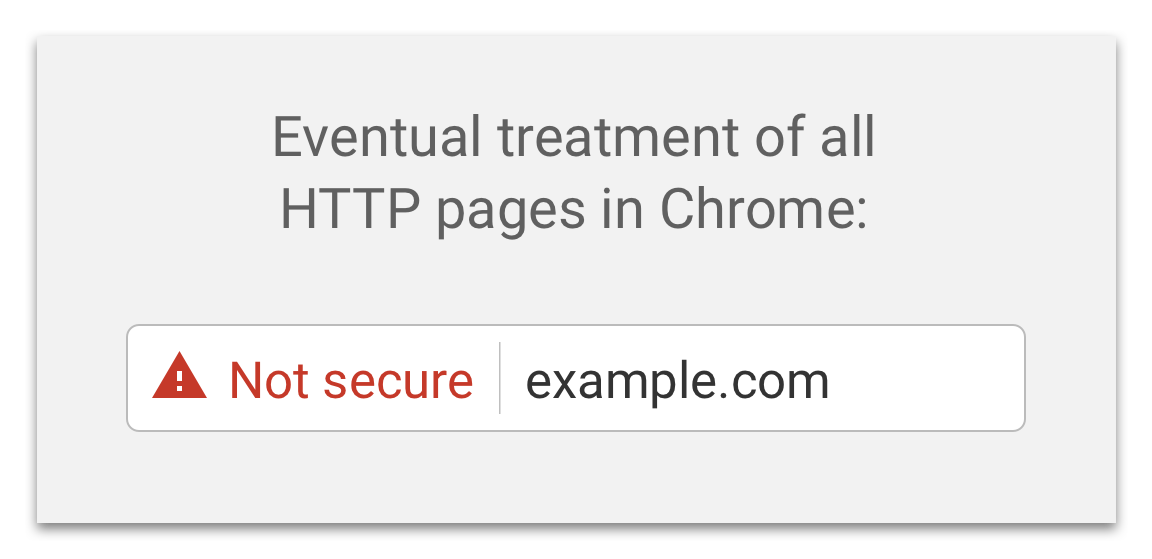
From the way things have been moving, Google will be making the not-secure message more obvious and off putting, having said they will eventually change it so that any website without an SSL certificate is marked as non-secure like this.
It’s only a matter of time before this becomes the new normal and so our recommendation is to ensure you have an SSL Certificate. This builds trust with your visitors and will help your website achieve its objectives. There is also some research that this can help with your SEO performance.
For more information about SSL certificates and why you need them, have a read of an earlier blog we posted here – what is an SSL certificate and why you need it. Or if you have any questions regarding an SSL, drop us a line.